



As a business expands, one of the most common challenges is not poor employee performance, but a lack of transparency in work processes. Tasks are not completed on time, multiple employees perform the same task in parallel, decisions are delayed, and areas of responsibility become unclear. In most cases, the root cause of the problem is not the employees, but poorly structured processes. This is where "Process Mapping" becomes one of the most effective management tools for a business.
What is "Process Mapping"?
"Process Mapping" is the visual representation of a work process from its initial stage to the final outcome. This methodology presents each stage of the process, decision-making points, responsible individuals, and information flow in the form of a diagram. Simply put, a process map is a visual document that shows how operations are actually carried out within a company. This methodology enables managers and employees to:
• Understand the process in a consistent way;
• Clearly identify areas of responsibility;
• Identify problematic areas;
• Detect repetitive operations;
• Standardize and improve processes.
Why is "Process Mapping" important?
In many organizations, processes exist only in employees' knowledge and memory. When a new employee joins the company, everyone may explain the process differently, information can be lost between departments, and overall efficiency decreases. A process map directly contributes to addressing these challenges. Key benefits:
• Identifying problematic areas
• Eliminating repetitive operations
• Clarifying areas of responsibility
• Accelerating the onboarding of new employees
• Strengthening coordination between departments
• Simplifying preparation for audits and ISO standards
• Establishing a strong foundation for automation
Which processes can be mapped?
In fact, any recurring operation within a company can be transformed into a visual process map. Examples include:
• Recruitment process
• Procurement process
• Sales process
• Customer inquiry management
• Financial approval procedures
• Supply chain
• IT support process
• Contract approval
• Project management
How is "Process Mapping" created?
1. Identify the process to be mapped
The first step is to clearly determine which process you want to analyze. This is usually:
• A process that causes delays;
• A process that regularly creates problems;
• A newly established workflow;
• An operation you want to improve. The starting and ending points of the process should be clearly defined.
2. List all steps and participants
Record all the following elements involved in the process:
• Departments;
• Employees;
• Systems;
• Documents;
• Input and output data. At this stage, collecting feedback from employees who directly execute the process is particularly important.
3. Arrange the steps in the correct sequence
Now arrange all stages in the same order in which the process actually works in practice. The following questions should be answered:
• What is the first step?
• What happens next?
• At which point is a decision made?
• Which department moves the process forward?
• At what point is the process completed?
4. Create the visual diagram
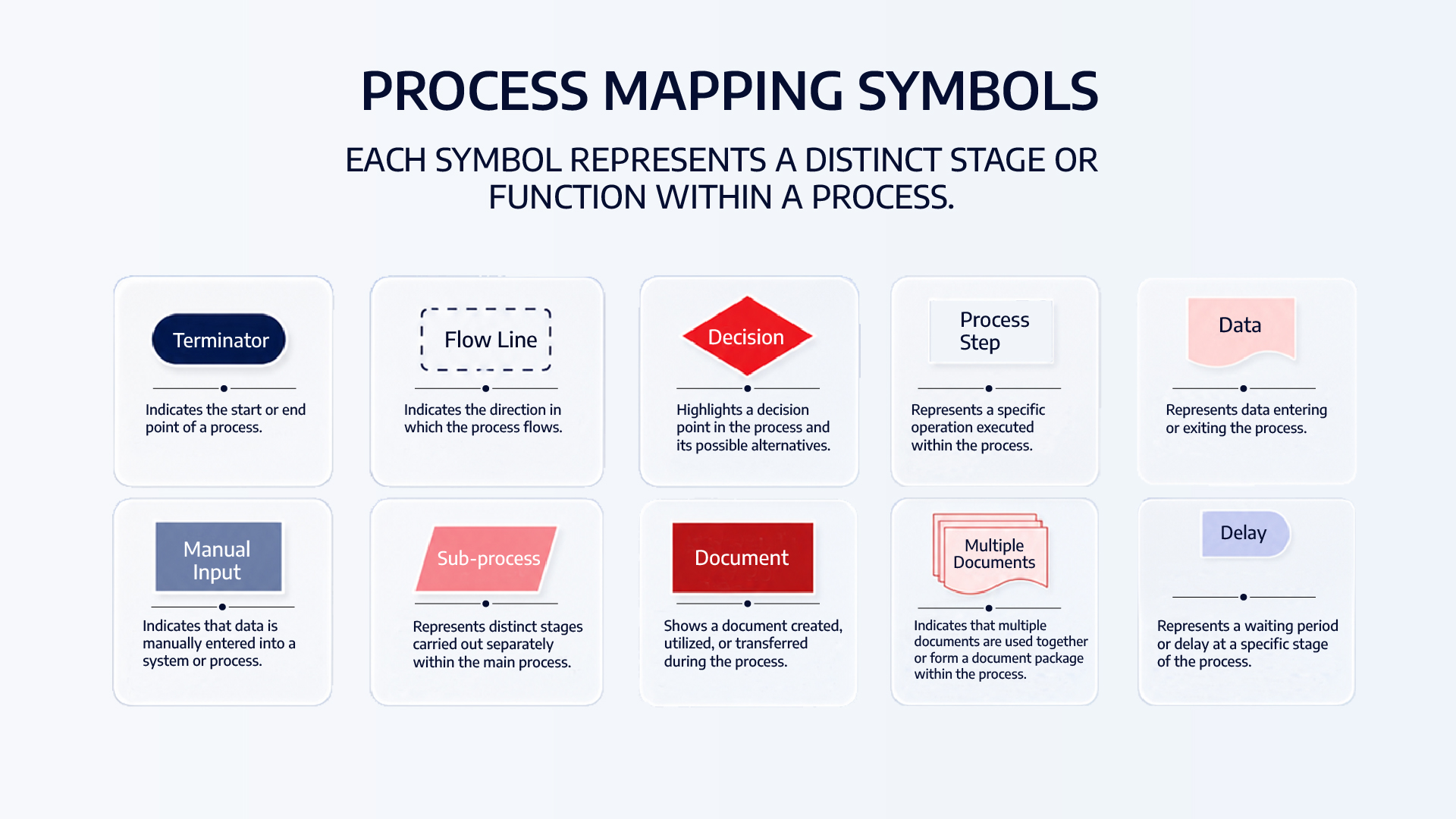
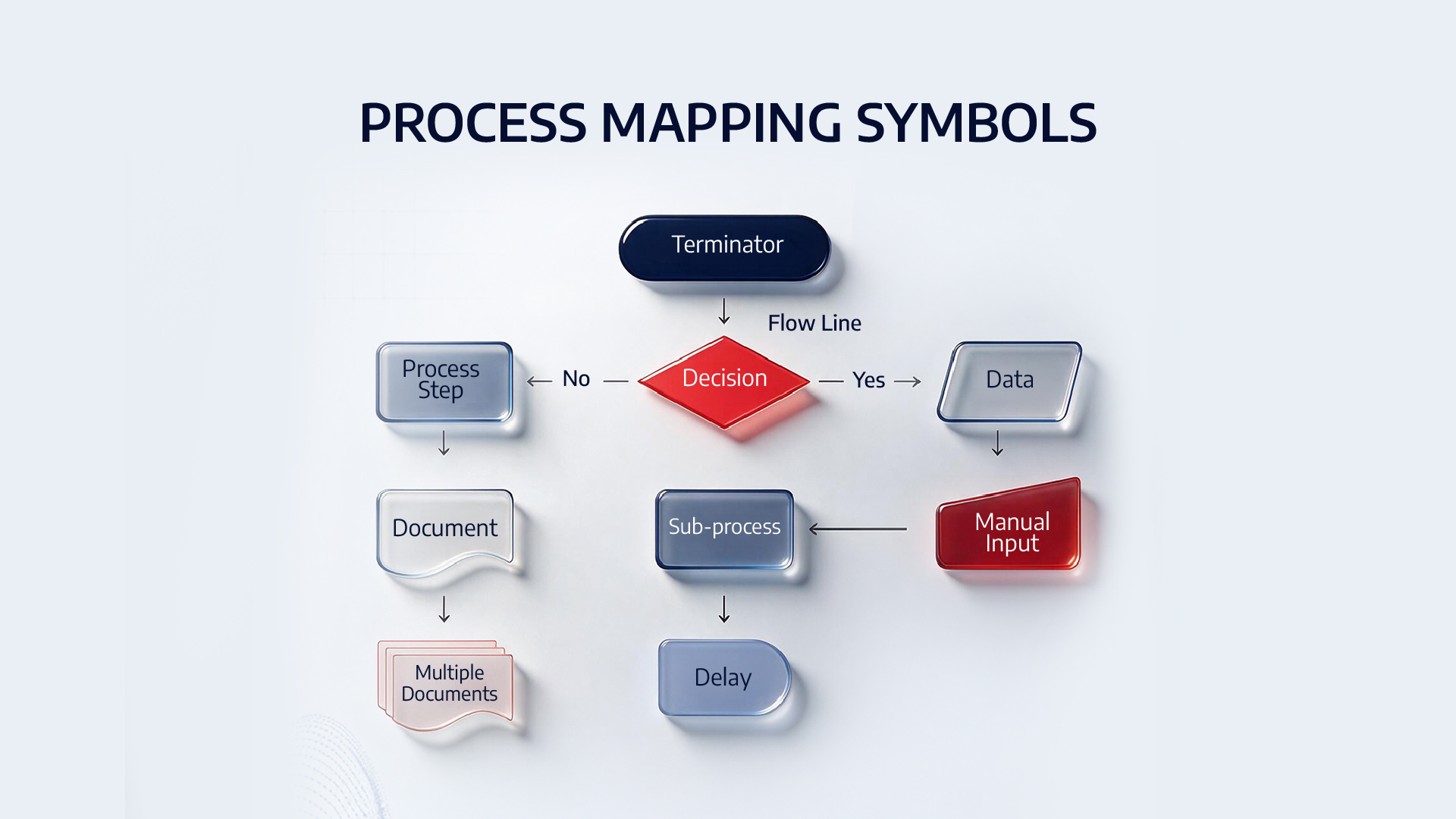
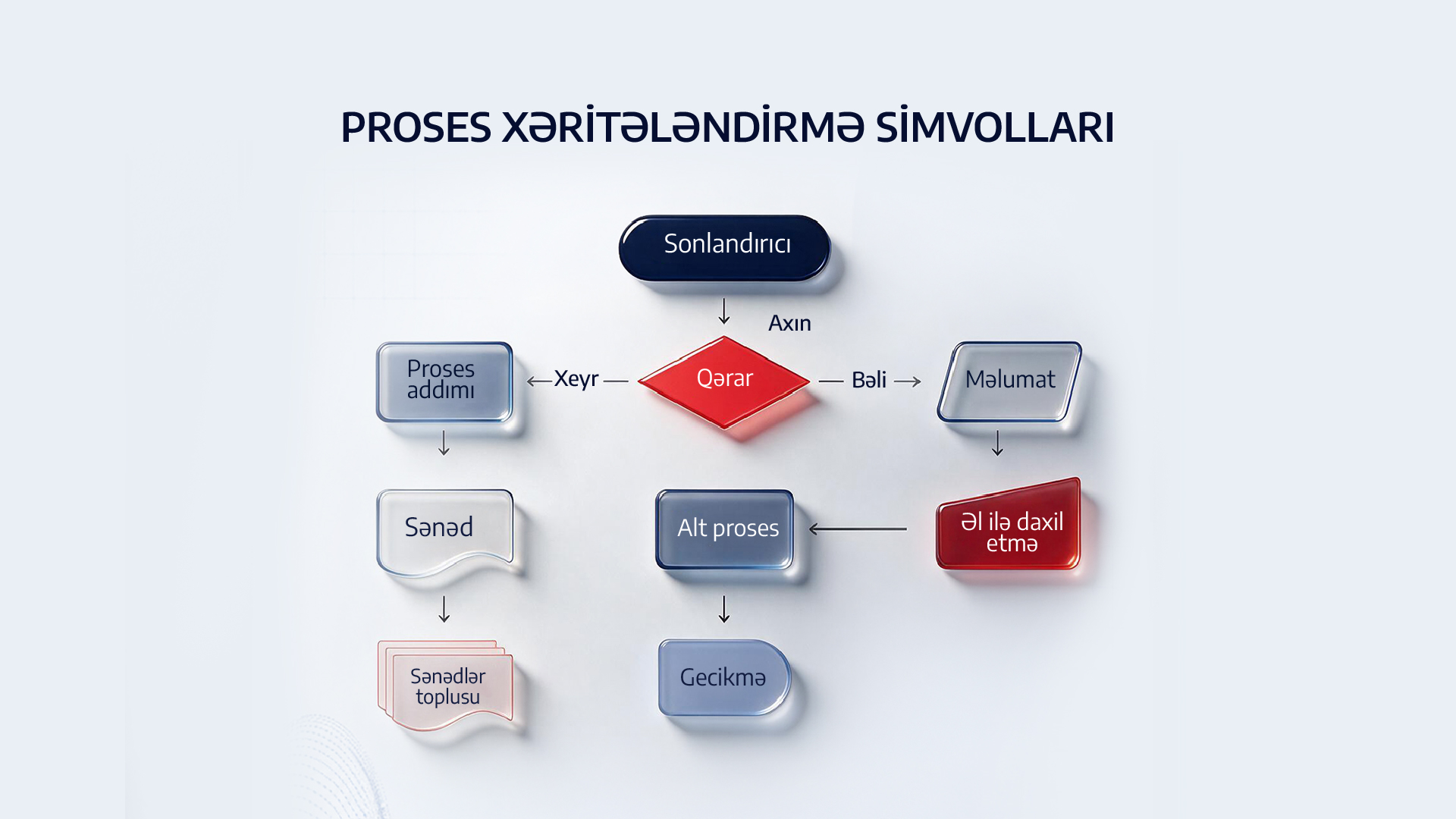
Once all the information has been collected, the process is presented in the form of a diagram. The most commonly used elements are:
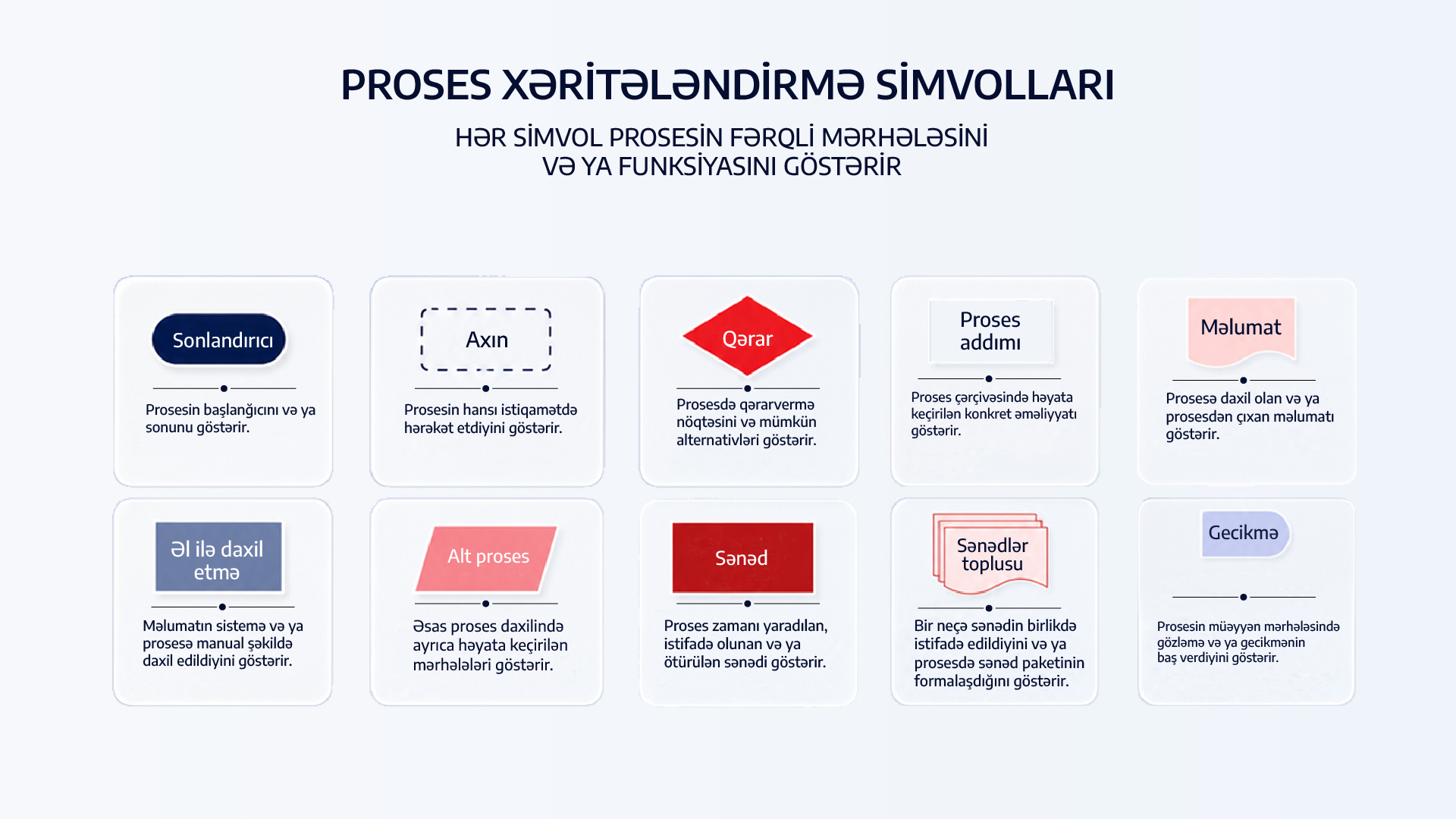
• Oval — Start and End
• Rectangle — Operation
• Arrow — Process Flow
• Diamond — Decision Point
• Parallelogram — Input and Output Data These standard symbols make the process easy for everyone to understand.
5. Review the process with the team
The completed process map should be reviewed together with the employees who are directly involved in executing the process. This stage helps identify:
• Steps that were overlooked;
• Duplicate operations;
• Areas where delays occur;
• Unclear areas of responsibility.
6. Implement improvement measures
The main purpose of a process map is not simply to create a document. The main objective is to improve the process. At this stage:
• Unnecessary steps are eliminated;
• Manual tasks are automated;
• Decision-making mechanisms are simplified;
• Responsibilities are reassessed;
• A new, optimized process is developed. This approach directly supports the development of a culture of continuous improvement within the organization.
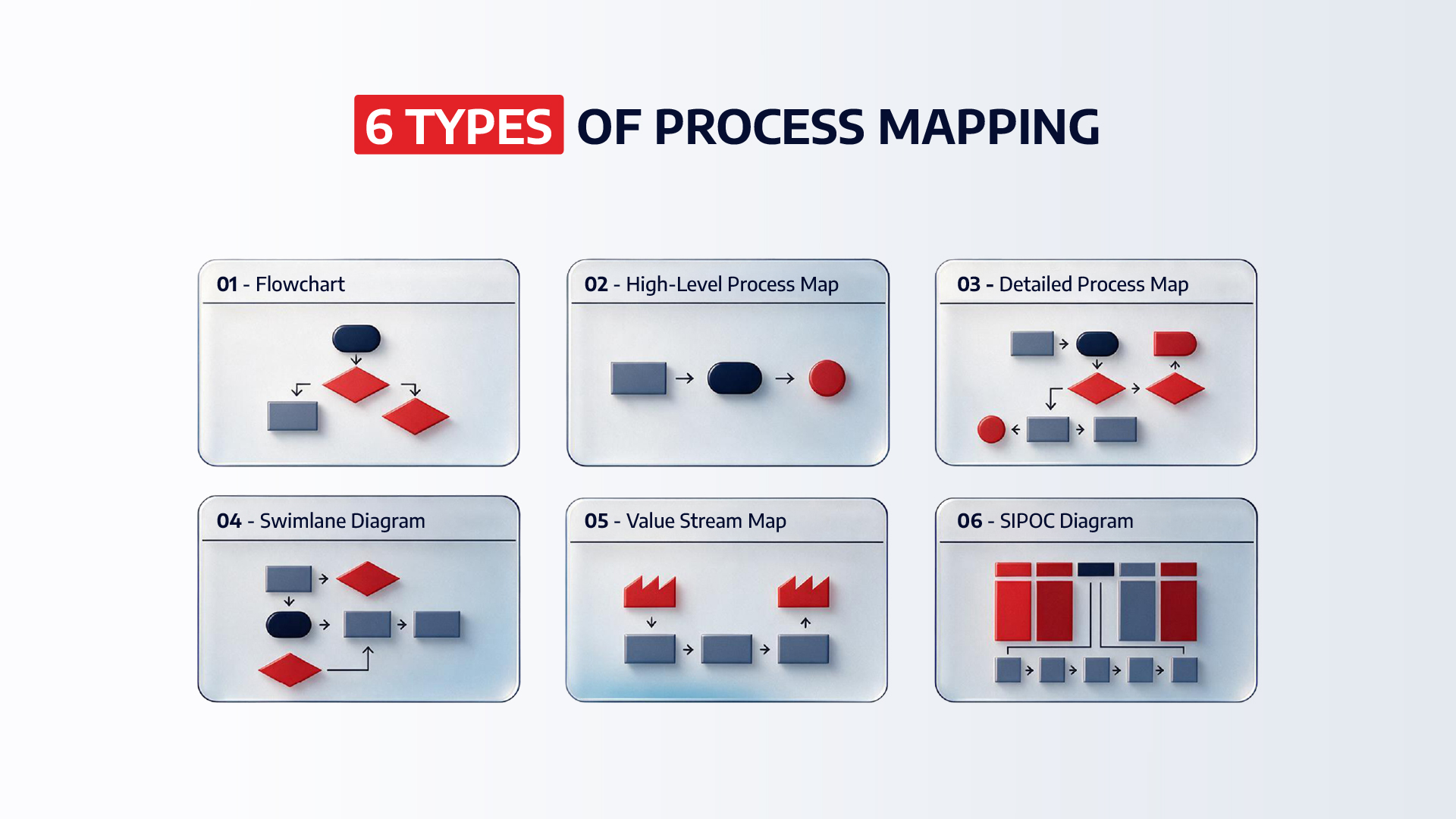
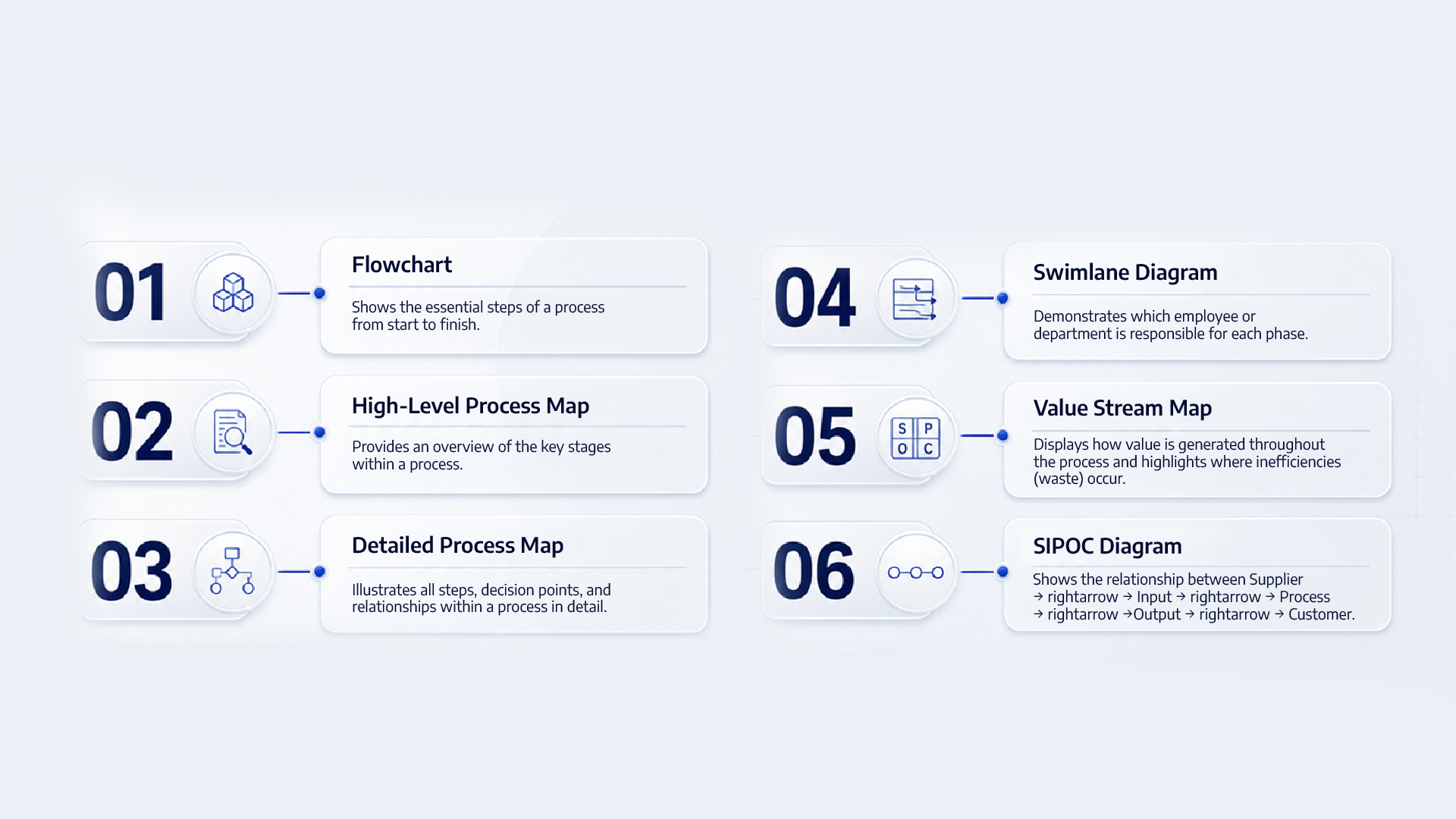
The most widely used types of "Process Mapping"
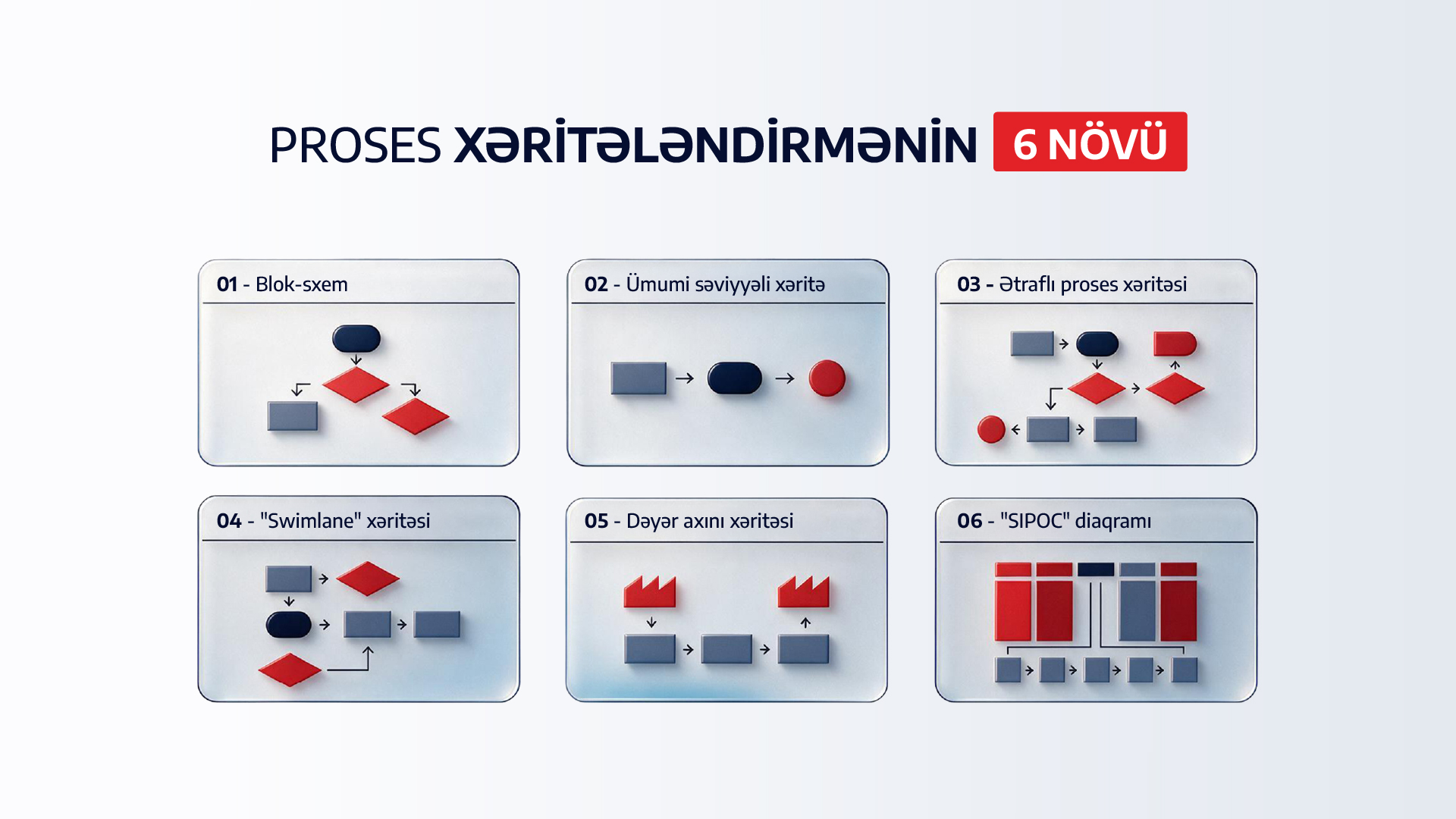
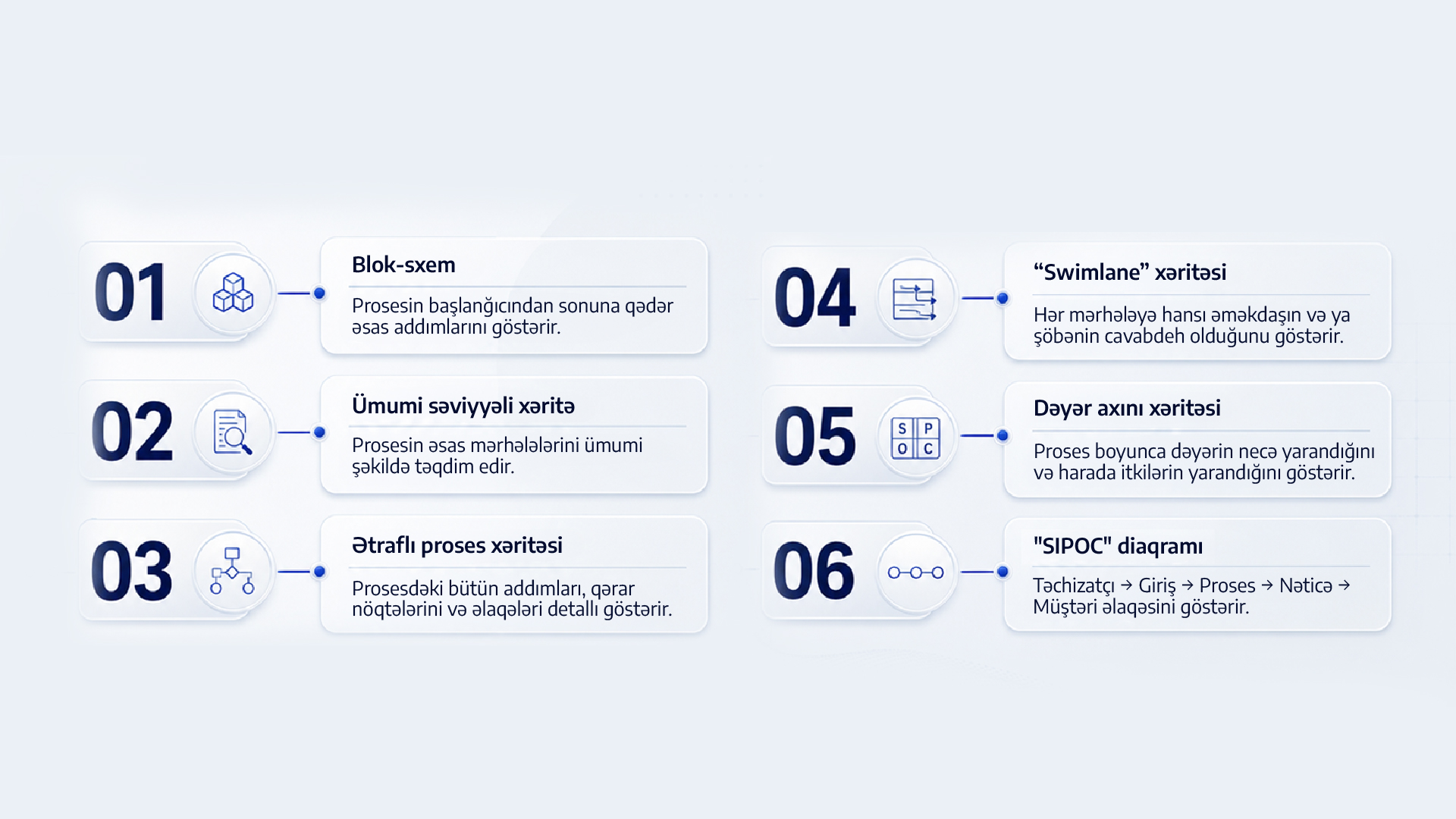
Different types of process maps are used for different purposes. • Flowchart
Used to illustrate simple and sequential processes. • Detailed Process Map
Enables complex processes to be examined in full detail. • Swimlane Diagram
Particularly suitable for showing the distribution of responsibilities between departments and employees. • SIPOC Diagram
Shows the relationship between suppliers, inputs, processes, outputs, and customers before the process is mapped in detail. • Value Stream Mapping
Used within Lean management to identify stages that do not create value. • BPMN (Business Process Model and Notation)
Considered an international standard for modeling processes that will be automated or integrated with different systems.
What results does "Process Mapping" deliver?
A properly developed process map provides companies with the following benefits:
• Reduced operational costs
• Faster decision-making
• Stronger coordination between departments
• Higher productivity
• Standardized work processes
• A more efficient audit process
• A ready foundation for digitalization and automation In other words, "Process Mapping" is not simply about drawing a diagram. It is a way to objectively understand how a company operates and create a solid foundation for working more efficiently.
Conclusion
As a business expands, keeping processes only in people's memory creates a significant risk. Visualizing information, clearly defining responsibilities, and identifying problematic areas at an early stage are essential conditions for continuous improvement. At Global Management, we believe that successful transformation does not begin with acquiring new software, but with properly analyzing existing processes. Process Mapping is one of the first and most important steps toward making your business more agile, transparent, and manageable.