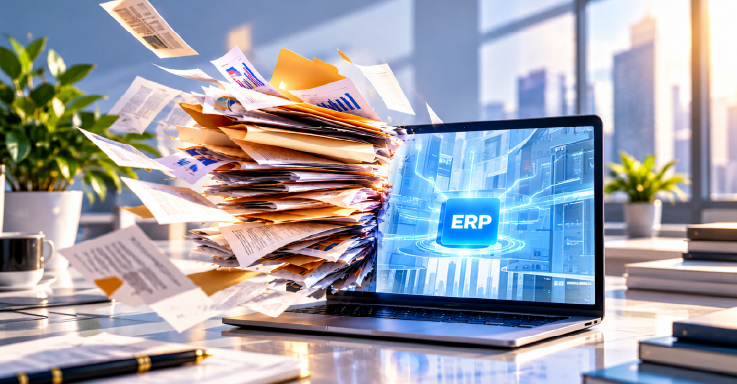
As companies grow, so does the amount of data, documents and processes they need to manage. When financial documents, employee records, procurement documents, reports and other operational data are scattered across different files and systems, managing them becomes increasingly difficult.
At this stage, digitalization is not just about going paperless. The main goal is to bring business processes together in a single system and create a more structured, transparent and efficient management environment.
How does ERP change digitalization?
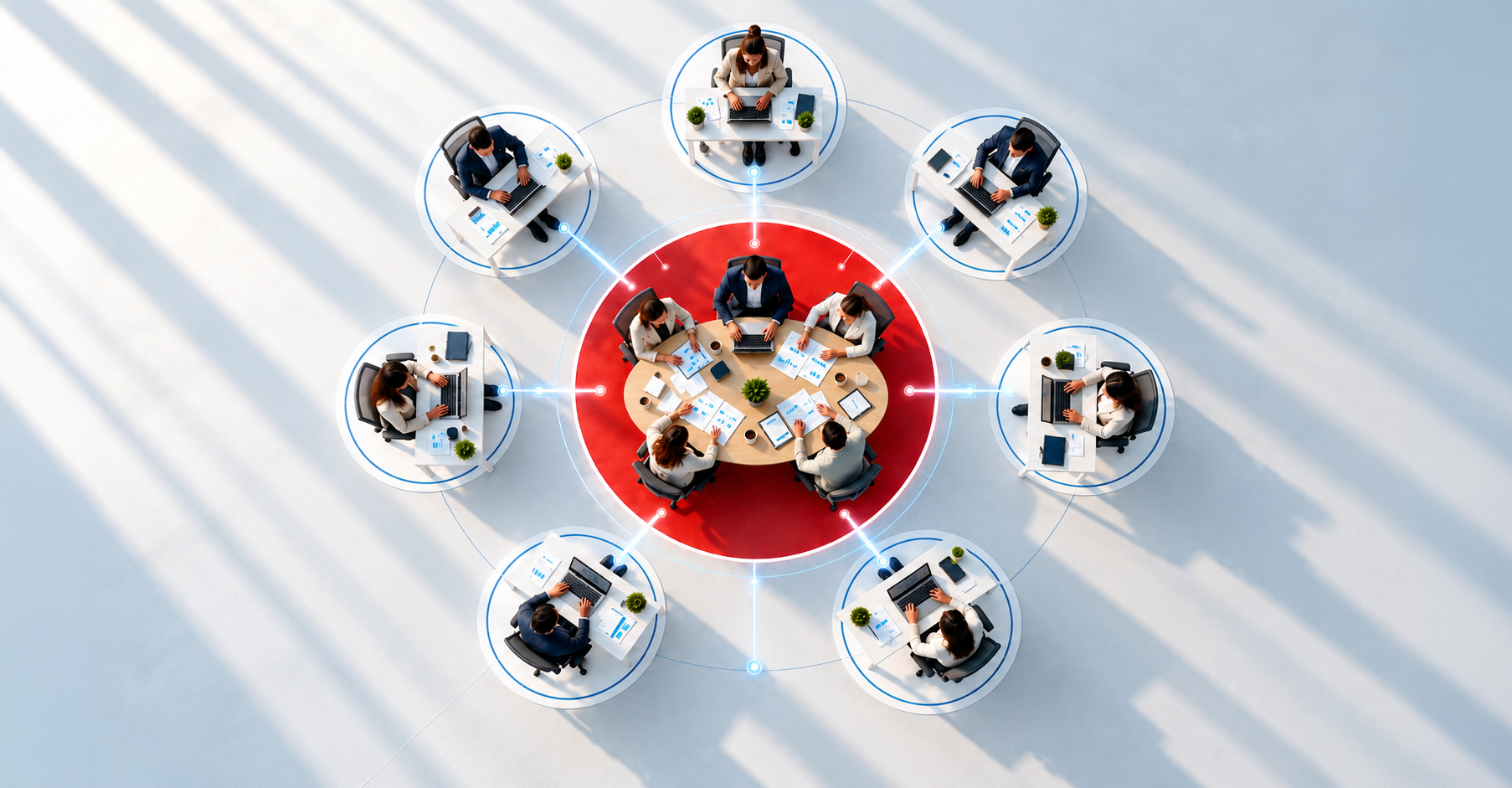
An ERP system brings a company's various functions together on a single platform. Instead of using a separate file or a different system for each process, data is managed in one unified environment.
For example, finance, procurement, human resources and other core operations can work in connection with one another. This reduces duplicate data entry, strengthens the links between processes and makes it possible to access the information you need faster.
The main advantage of an ERP system is not simply storing data electronically, but connecting different business processes and running them on a single management logic.
What does moving to a digital system deliver?
Less paper and archive burden
The need to store documents physically decreases, and managing information electronically becomes easier.
Faster access to information
Instead of searching for information in archives, emails and various files, it can be retrieved through a single system.
A unified, up-to-date database
An ERP system allows data generated in different departments to be gathered in one environment. As a result, employees work with the same up-to-date information rather than files stored in different versions. This helps prevent data inconsistencies and wrong decisions.
More structured process management
Information exchange between departments and process tracking are carried out in a more structured way. It becomes clearer which stage a process is at and who the next step depends on.
Process automation
ERP is used not only to store data, but also to automate business processes. For example, creating a purchase request, routing it for approval, generating the order and initiating payment can follow a predefined sequence.
This reduces manual operations and the gaps that arise between processes.
Less repetitive work
Tasks such as entering the same data into different files and systems over and over again can be optimized. Transferring data between processes within the system reduces both lost time and additional operational workload.
Fewer errors
Entering data manually into different systems increases the risk of errors. Automating the flow of data within ERP helps reduce manual intervention and improve data accuracy.
Real-time information and control
Instead of waiting for key information to be collected separately from different departments, management can monitor the current status of processes more promptly through the ERP system.
Having data on budgets, procurement, payments, inventory levels and other indicators in a single system enables more timely decision-making.
Better reporting and analytics
When data is gathered in a single system, preparing reports and comparing indicators becomes easier. Management can track key metrics and identify delays and deviations in processes more quickly.
More transparent management
When processes and data are gathered in a single system, they become easier to track. It is clearer who performed which operation, which stage a process is at and which approvals are pending.
Clear responsibility and approval mechanisms
In an ERP system, the roles and responsibilities of process participants can be defined in advance. This clarifies who makes decisions and at which stage, and strengthens control.
Access management
Not every employee should have the same access to all information. An ERP system makes it possible to set access rights according to user roles. This way, each employee only has access to the information and functions needed for their position.
A system that scales as the business grows
As a company grows, new employees, departments, branches and processes emerge. A properly configured ERP system can make it easier to integrate new operations into the existing management model and support business expansion.
How does ERP work in practice?
Let's take the procurement process as an example.
In the traditional approach, an employee creates a purchase request and emails it to a manager, price quotes are kept in separate files, approval is obtained through another channel, and payment details are submitted to the finance department all over again.
In an ERP system, these stages can be connected within a single process:
This way, the current stage of the process, who the next step depends on and all related documents are visible in one system.
This approach not only speeds up the process, but also reduces the risk of data being lost or entered twice, and of the process being fragmented across different communication channels.
Digitalization is more than getting rid of paper
Converting all of a company's documents into electronic format is only one part of digital transformation. The real change is redesigning how processes are managed.
The ERP approach makes it possible to manage different processes within a unified business system rather than in isolation from one another.
The important point here is that an ERP system should not be used simply to digitize an existing inefficient process. If the process itself is poorly designed, moving it into a system will not solve the problem.
That is why the transition to ERP should be approached not only as a technology project, but as a project to analyze and improve business processes.
For effective results, existing processes should first be mapped, unnecessary steps optimized and responsibilities clarified. Only then should you plan how the processes will be managed through the system.
The core value of ERP is not just digitizing data. Its main advantage lies in connecting a company's various processes in a single system, accelerating the flow of information, reducing manual operations and giving management a fuller picture of the current state of the business.
Global Management supports companies with digital transformation solutions, helping them analyze and systematize their business processes and build a unified digital management environment.