




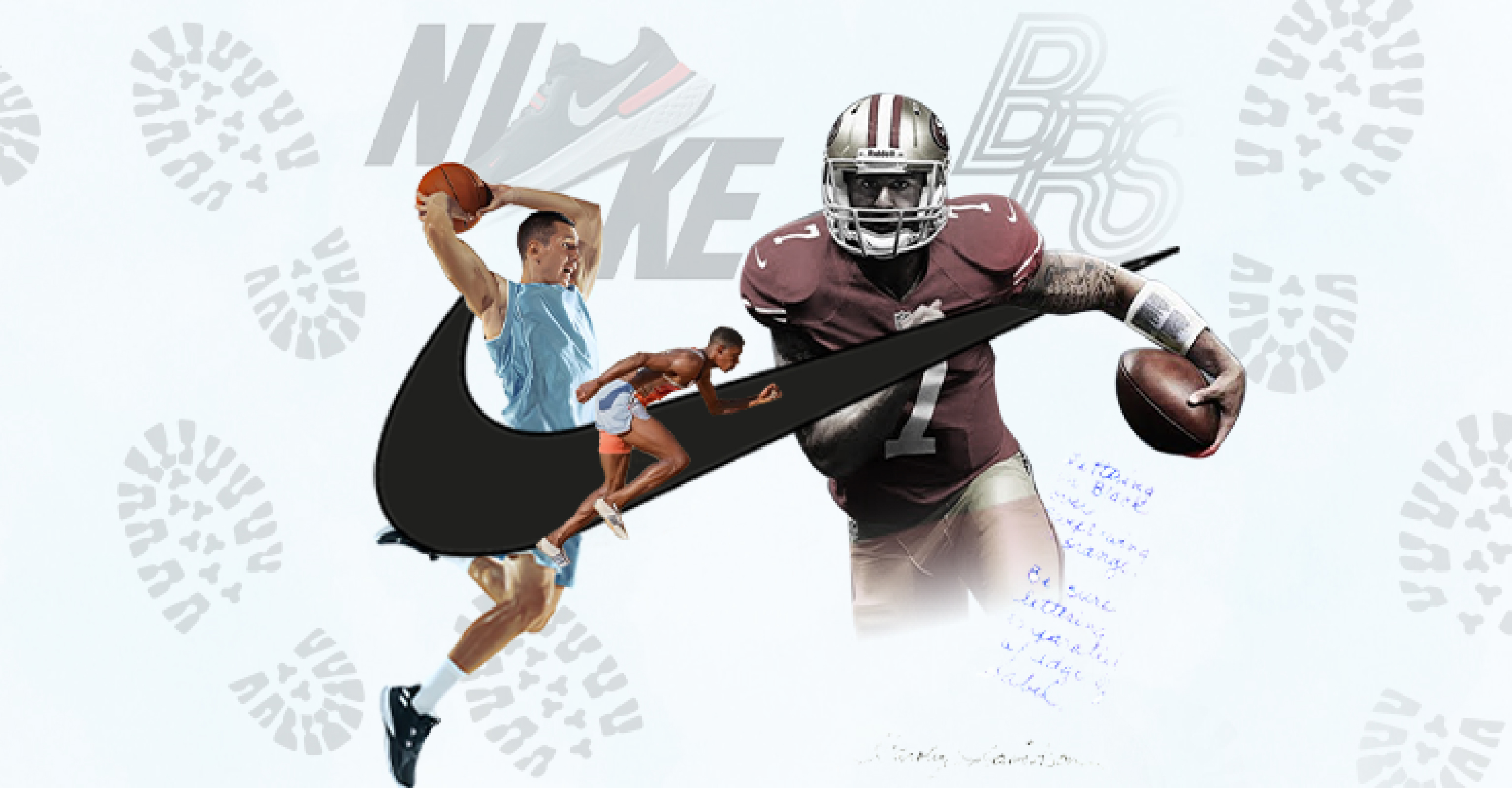
From a $35 Logo to a $140 Billion Empire
Nike is more than just a sports brand. It has become a symbol of revolutionary design, bold marketing, and emotional power. But how did this brand come to be? Nike’s story actually began with a very simple idea: to make better sneakers.
Let’s take a look at the path this $140 billion empire has taken.
It all started in the trunk
In 1964, a young man from Oregon, Phil Knight, started selling sneakers out of the trunk of his car. Knight, who was studying at Stanford University, sold shoes imported from Japan called Onitsuka Tiger (now ASICS) at races and sporting events. The brand was originally called Blue Ribbon Sports (BRS), and its first year had a turnover of only $8,000. At that time, no one could have imagined that this small initiative would one day become one of the most valuable brands in the world.
Athlete and coach: the perfect team
Knight was a mediocre athlete in college. His coach, Bill Bowerman, was a man with an interest in different shoe designs. As the famous track and field coach at the University of Oregon, Bowerman was constantly looking for new ways to improve the performance of athletes. He would manually modify each athlete's shoes to increase their speed and endurance. Together they developed the first prototypes, and even Otis Davis, who ran in these shoes, won a gold medal at the 1960 Olympics. This was the first success that proved the real effectiveness of the product.
The brand name came in a dream
In 1971, the brand had to change its name. Although Knight suggested the name "Dimension 6", team member Jeff Johnson had a dream that the name Nike, the Greek Goddess of Victory, had. In Greek mythology, Nike represented victory and speed - the perfect symbol for a sports brand. The name was both symbolic and memorable, and it was chosen. Interestingly, Johnson was the first employee of the company, and his intuition determined the fate of the brand.
$35 Logo - Swoosh
The famous Swoosh, Nike's logo, was drawn by Portland State University student Carolyn Davidson for just $35. Although Phil Knight initially thought the logo was "not great... but maybe I'll like it later," the symbol eventually became the soul of the brand. The Swoosh design was inspired by the wings of the goddess Nike and represented movement, speed, and dynamism.
Davidson was later awarded 500 Nike shares as a token of appreciation. These shares are worth $1 million today. In 1983, Knight presented him with a custom-made gold Swoosh earring and a stock certificate, saying, "I'm not such a bad customer, am I?"
A mistake - an invention: Waffle Trainer
One morning, Bowerman spilled rubber on his waffle maker while making waffles. Although the experiment failed, the idea for the "Waffle Trainer" was born. Introduced in 1974, the model featured a waffle-iron pattern on the sole for better traction. It was Nike's first big sales success, and by 1979, the company had captured half of the sneaker market. Sometimes, success comes from random mistakes.
The legend that began with Jordan
In 1984, Michael Jordan was signed to a $500,000 contract before he even wore Nike. At the time, Jordan actually wanted to sign with Adidas, but Adidas management rejected the offer. It was a risky decision at first. But the Air Jordan series brought in $100 million in revenue in just one year.
Jordan's shoes were subject to a $5,000 fine per game for violating NBA rules, but Nike agreed to pay these fines and created a marketing campaign around it. The series is still Nike's most profitable product line, generating an estimated $5 billion in revenue in 2022.
"Just Do It" – The Most Effective Slogan in History
In 1988, the slogan that took the Nike brand to a whole new level appeared: Just Do It. The inspiration was unusual - the last words of criminal Gary Gilmore before his execution: "Let's do it". The advertising agency Wieden+Kennedy took this phrase and adapted it to Nike's philosophy. This slogan reached not only athletes, but everyone. "Leave the excuses and just do it". Nike turned it into a masterpiece of marketing, and for more than 30 years this slogan has remained unchanged.
A brand that is not afraid to take risks
In 2018, Nike made former NFL player Colin Kaepernick the face of a campaign. Kaepernick was known for kneeling during the national anthem in protest of racial injustice, a move that cost him his NFL career. The advertising poster read:
"Believe in something. Even if it means sacrificing everything."
Although this bold move caused controversy, the results were unexpected. In 1 month, the brand value increased by $6 billion. Nike's shares rose by 5% and online sales increased by 31%. This showed that Nike was ready to take a stand on social issues, not just sports.
Criticism and changes
In the 1990s, Nike faced severe criticism due to the harsh working conditions in factories in Asia. These sweatshops were the subject of reports of low wages, long working hours, and poor conditions. In the face of media, student boycotts, and public pressure, the brand took serious steps to improve conditions starting in 1998.
Nike increased transparency in its supply chain, raised the minimum age, and improved working conditions. In 2005, Nike became one of the first global companies to publish a complete list of its supplier factories. This was one of Nike's first steps toward becoming a more responsible brand.
Strategy: From wholesale to direct to customer
Nike has been moving away from traditional sales models in recent years, focusing on a direct-to-consumer (D2C) strategy. In 2017, the company announced its "Consumer Direct Offense" strategy, and began to engage directly with consumers through digital channels. In 2021, online sales generated $5.5 billion in revenue.
In 2024, it announced plans to cut 1,600 jobs as part of a restructuring. This is the company's attempt to transition to a more agile and digital-friendly structure.
CEO John Donahoe justified these changes as follows:
"We have a strong plan full of innovations. We start with the Olympics."
Nike's secret: Creating a brand story
The key to Nike's success is not just shoes. They have created a brand story that connects emotionally, inspires and touches on values. Nike does not just sell a "product", it sells a call to action. They try to awaken the athlete in everyone.
Nike's ads are always full of stories of heroism, self-improvement and overcoming obstacles. In addition to sports stars such as Serena Williams, LeBron James, Cristiano Ronaldo, they also tell the stories of ordinary people. The brand's message has not changed over the years: Just Do It!
Nike's story shows us that success comes not only with product quality, but also with vision, difference and courage. This brand didn't just adapt to the market, it shaped it.
As Phil Knight said in his autobiography "Shoe Dog", "If you have a product, try to sell it. But if you have an idea, fight for it".
If you have an idea and you believe in it, just start. Who knows, maybe the next big brand will be born from your idea.