


A Brand’s Journey Through Time: Nestle
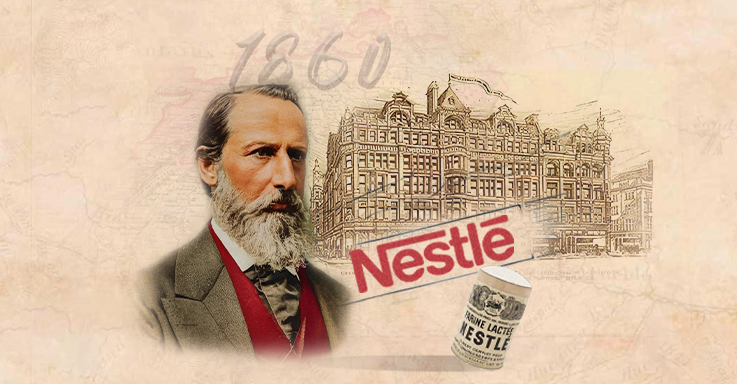
In the mid-19th century, infant mortality was a major problem in Europe. The main causes were the shortage of breast milk and the lack of complementary food alternatives. In response to this crisis, the talented chemist and pharmacist Henri Nestle came up with the idea of creating an easily digestible artificial food for babies.
In 1867, Nestle developed a revolutionary product called “Farine Lactée” consisting of milk, flour and sugar. It was one of the first commercial solutions in history for feeding babies. It immediately saved the life of a baby in the first test. Thus, the product became known as “nutritious, easily digestible and life-saving”.
The Creation of the Logo: A Symbol of Nest, Care and Trust
Henri Nestle’s surname means “nest” in German. His family coat of arms featured a bird’s nest. Henri chose this symbol as the brand’s first logo. The image of a mother bird and her chicks conveyed the message of “maternal care and nourishment”. This was a perfect symbol for creating an emotional connection with consumers, especially in the baby food market. As a result, the Nestlé logo became one of the world’s first recognizable visual brands. Although the logo has undergone some modernizations over the years, the bird’s nest remains a key element today.
Trust Marketing: Growing Through Doctors’ Recommendations
Nestle chose a clever tactic when marketing its products. They marketed their baby food as medical food recommended by doctors, pharmacists, and maternity hospitals, rather than directly to parents. This approach allowed them to gain public trust and authority. Soon after Switzerland, exports began to France, Germany, and England. Thus, Nestle became an early example of global branding.
Diversification and Growth: From Milk to Chocolate, Coffee, and More
In 1905, Nestle merged with the Anglo-Swiss Milk Company to expand its product range. New categories such as condensed milk, chocolate, and coffee were now part of the portfolio. Food shortages during World War II further strengthened Nestle's position in the canned food segment.
The New Era: Television Commercials and Focus on Families
In the 1950s, Nestle launched its first television and radio commercials. The brand's target audience expanded. Now it was addressed not only to mothers, but to the entire family. Products began to be presented under different names: Nescafé (coffee), KitKat (chocolate), Nesquik (children's drink). Nestle adopted the "umbrella brand" strategy, creating numerous sub-brands (Maggi, Gerber, Purina, etc.).
Nestle Today: Healthy Lifestyle and Social Responsibility
With the slogan "Good Food, Good Life", Nestle positioned itself not just as a food producer, but as a brand that improves people's quality of life. The company implements social responsibility projects on a global scale in areas such as health, environmental sustainability, recycling and efficient use of water resources.
Nestle currently operates in more than 190 countries. More than 1 billion Nestle products are consumed worldwide every day. The company uses data-driven approaches, artificial intelligence, and hyper-focused campaigns in its marketing strategies.
Over the years, Nestle has grown from a baby food manufacturer to a legendary global megabrand. Its 150-year story highlights the importance of continuous learning, transformation, and innovation for business.